

Enterprise deals don’t behave the way attribution models pretend they do.
And yet, most B2B teams still try to answer high-stakes questions like: “Did this campaign work? What moved this deal? Which channels deserve more budget?” Using systems built under the premise that a single person, a single form fill, and a neatly trackable touchpoint “caused” an opportunity.
That premise doesn’t really work.
In modern ABM cycles, a single deal can involve an extensive network of stakeholders, scattered across functions, geographies, and touchpoint surfaces. You may see dozens of interactions, many invisible to CRM, happening across emails, meetings, forwarded threads, social channels, and unstructured buyer behavior.
We’ve all lived through this chaos. And all Upside customers’ raw data shows the same pattern long before we clean it: duplicates, missing timestamps, disjointed personas, off-CRM conversations, and signals buried in meeting notes, call transcripts or email chains. Traditional attribution tries to compress that complexity into a zero-sum game. If marketing gains credit, sales must lose it, or vice versa, driving arguments over credit and a lack of collaboration.
But enterprise buying cycles are not zero-sum. When done right, they are collaborative, cumulative, and deeply multi-threaded.
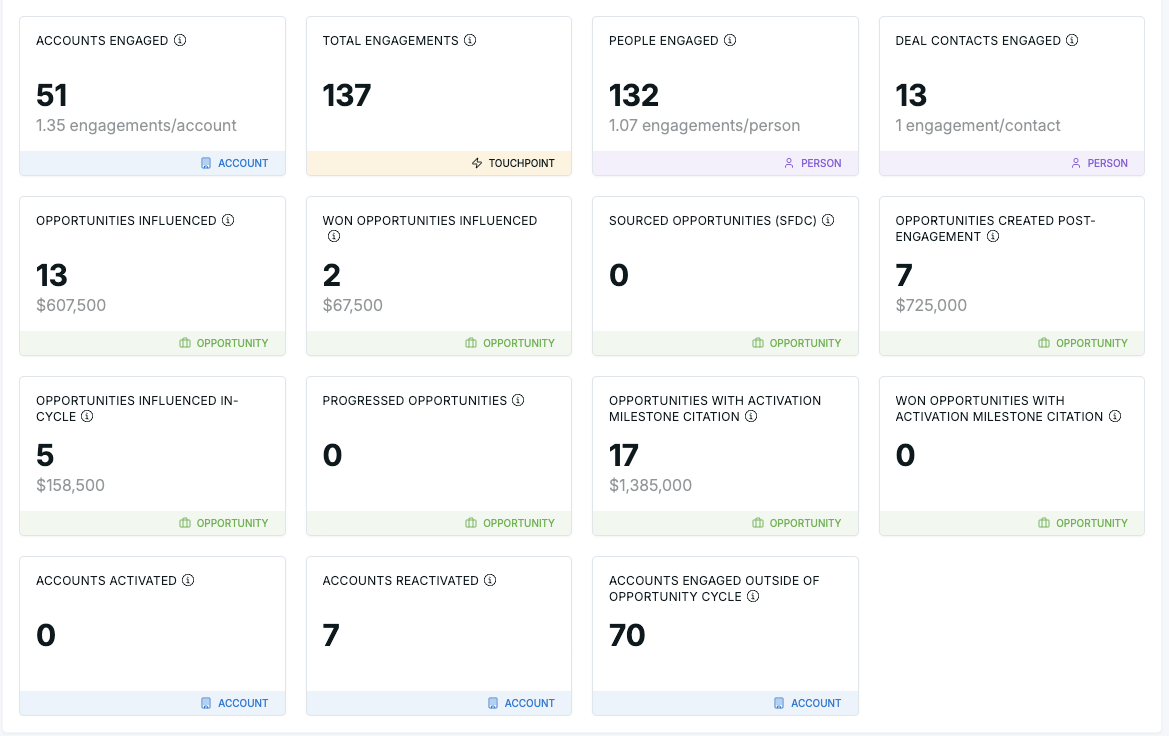
At Upside, we aim to replace this illusion of precision with metrics designed for how deals actually happen using forensic attribution. Below are nine metrics modern teams use when they want to understand the full, multi-dimensional impact of their GTM efforts across the entire account journey: before, during, and beyond the opportunity.
Why Identifying the Real Buying Group Matters More Than Ever
You cannot measure influence accurately if you don’t know who the real buyers are. Most CRMs list a single “Primary Contact” roleplayer or a sparse handful of names, if any, and few organizations focus on enforcing CRM contact role cleanliness — AEs would rather do what they do best, sell the product vs doing “data entry”. But enterprise deals are shaped by a constellation of actors: the economic buyer, the technical screener, the blocker, the champion, the end user, the skeptic, the change-management owner, and others who pop in and out of the process.
Failing to consider activity from the whole buying group can often lead to:
1. Wrong conclusions about what worked
If only the champion is tracked, an entire tail of influence generated by campaigns among engineers, finance, operations, or procurement remains invisible.
2. Misallocated budget
When your reporting dashboards miss the real impact on opportunities, teams end up under-investing in the very channels activating their influencers, technical reviewers, or even deal sponsors.
3. Broken GTM alignment
Marketing, SDR, and Sales end up optimizing for different people, sometimes not the ones who actually drive the deal forward.
To measure what matters, you need to detect the actual buying group - who participated, who engaged, who influenced, and when.
This is where Upside’s approach is fundamentally different.
How Upside Detects Activation, Influence, and Buying Groups Using AI
Upside starts from a simple but radical principle:
You can’t attribute what you can’t see.
To reconstruct how deals really moved, Upside ingests signals across the entire GTM stack CRM, marketing automation, email inboxes, calendars, meeting transcripts, website activity, content interactions, and more. Then, we use a combination of identity resolution, email-chain reconstruction, and AI-powered detection logic to unify everything into a clean, objective timeline.
1. Complete Identity Resolution
People show up under multiple emails, mismatched CRM records, and forwarded threads. Upside merges them into a single identity, so you don’t treat five duplicates as five people.
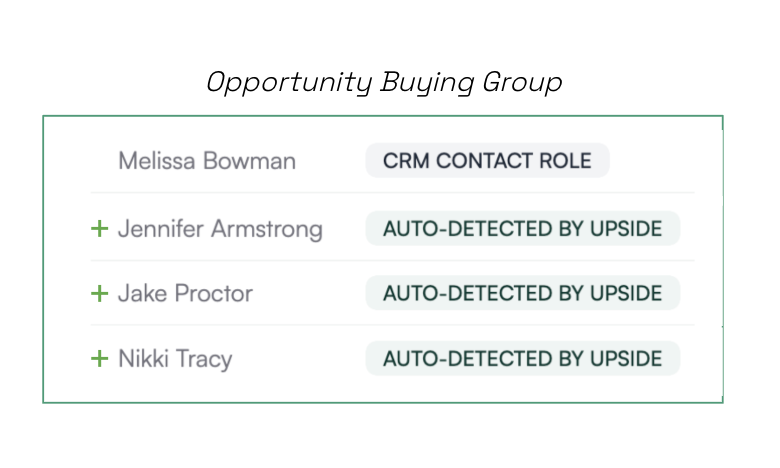
2. Buying Group Reconstruction
We identify relevant stakeholders: those who attended relevant meetings or were involved in relevant email threads. We only count participants with engagements as relevant, meaning someone added to a thread who never replied is not considered an active buying group participant.
3. Directional Touchpoint Detection
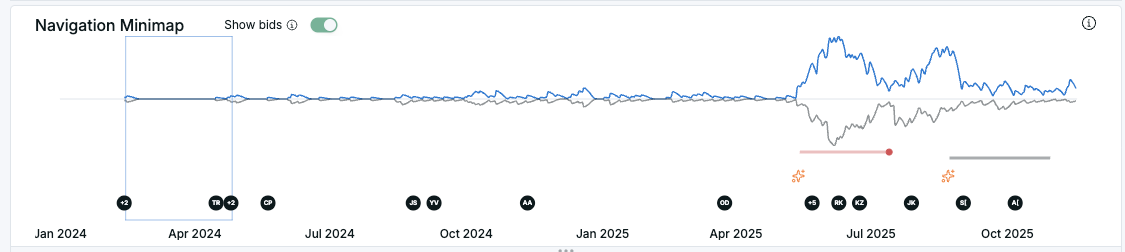
Upside distinguishes attempts (emails sent, invites, outbound calls) from engagements (replies, acceptances, meetings held, content consumed). That distinction is essential for measuring influence: only campaigns and emails that drive engagement are counted.
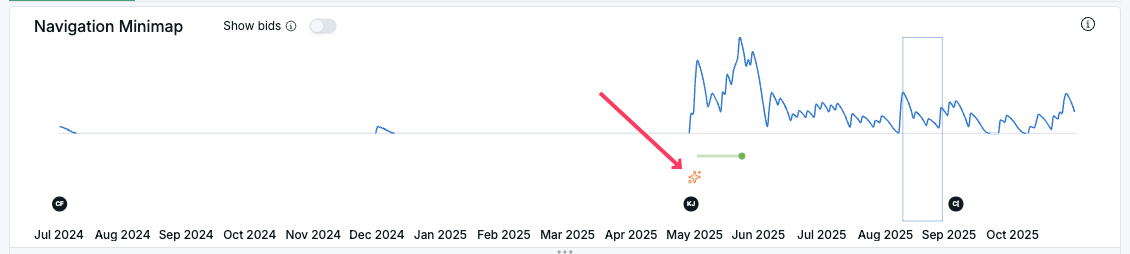
4. AI Detection of Activation Moments
Upside’s AI agents scan the unified timeline to determine when an account or opportunity moved from “quiet” to “active.” Those moments are summarized into “Milestone Analyses” helping teams understand what really drives their pipeline.
The 9 Metrics That Reflect How Enterprise Deals Really Happen
Below are the nine metrics that replace outdated attribution models with a more accurate, more actionable understanding of influence. In Upside, these metrics can be applied on campaign reports, channel reports, web reports, or even rep reports, and can be filtered by account and opportunity fields or by date.
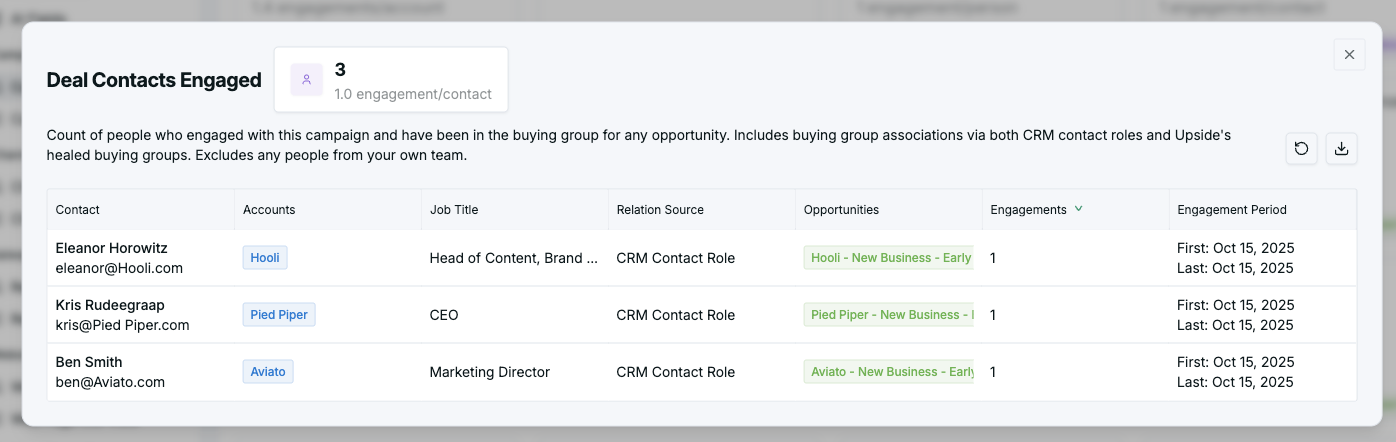
1. Deal Contacts Engaged
Who from the true buying group actually engaged?
In enterprise deals, engaging the right people matters far more than generating raw volume. This metric reveals whether your efforts reached the actual decision-makers, influencers, blockers, and champions.
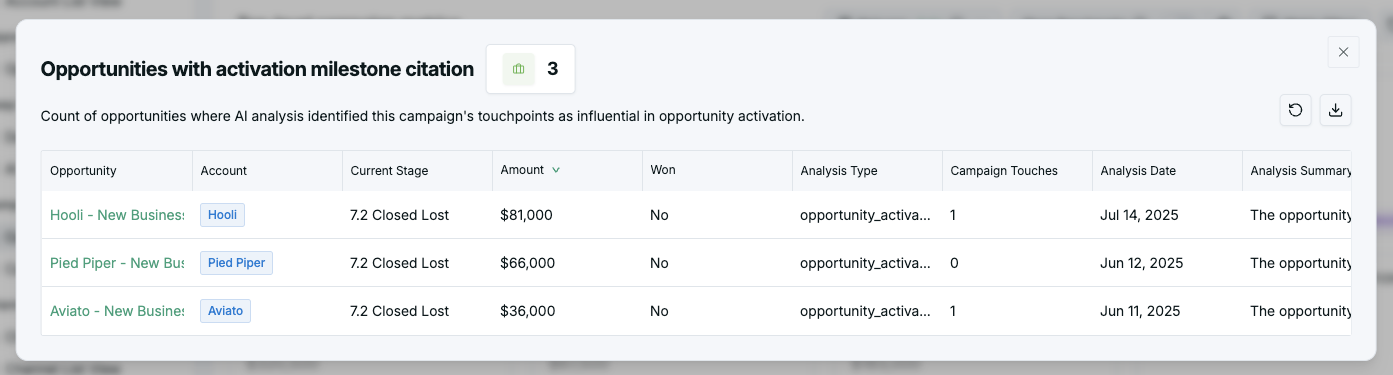
2. AI-Detected Opportunities Activated
Which opportunities moved into “active mode” as a result of your touchpoints?
Activation rarely looks like a clean form fill. Upside detects the real inflection point, the moment meaningful engagement begins, providing one of the most accurate “what actually worked” signals in modern GTM.
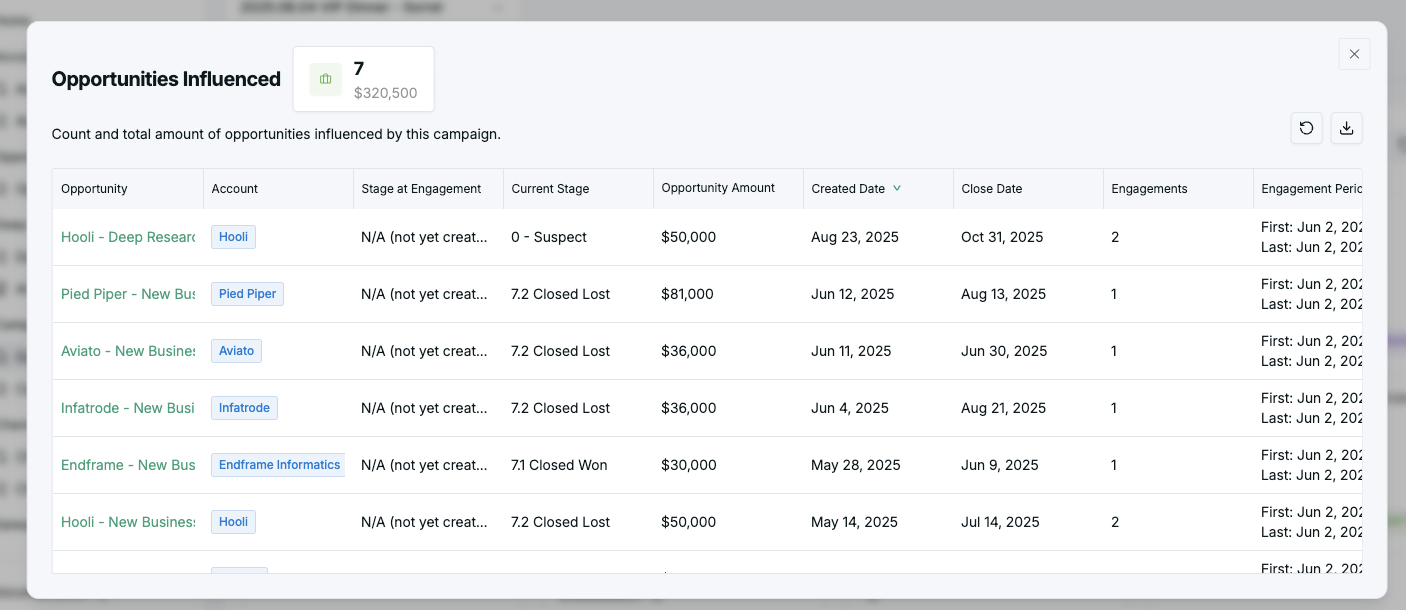
3. Opportunities Influenced
Which in-cycle opportunities experienced momentum or new engagement because of your touchpoints?
Upside counts influence someone's engagement in the healed buying group. This influence metric is superior to other, more generalized influence metrics because:
- It only looks at the buying group, but an enhanced version to what most other systems can report on
- It only looks at engagements - meaning non-active campaign memberships (i.e. invites, emails sent, etc) don’t count as influence.
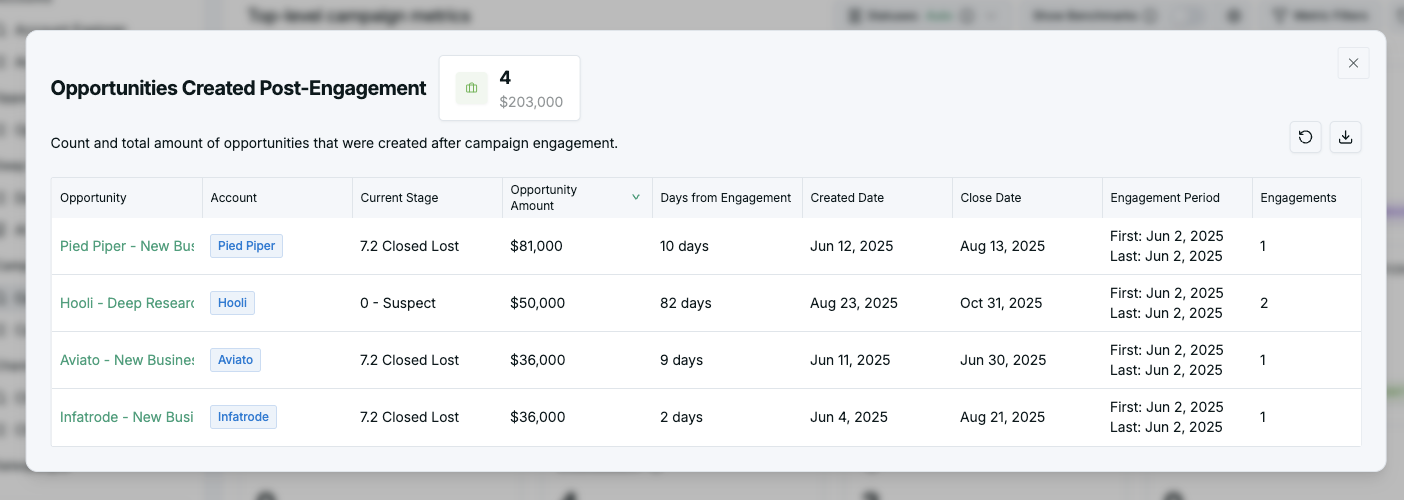
4. Opportunities Created Post-Engagement
Which new deals opened within a window after someone engaged?
This metric shows how many new deals were created after one of the buying group members engaged with the website, channel, or campaign. This is a great metric to help you understand what is actually helping to create new pipeline vs just influencing it.
5 and 6. Opportunities Influenced In-Cycle and Progressed Opportunities
Which touchpoints meaningfully affected or helped progress active deals?
These metrics complement Opportunities Created Post engagement by showing how many deals were influenced in flight. While some teams are heavily focused on pipeline, marketing, partnerships, or exec touches can have a significant impact on deal acceleration. These metrics help you understand what is actually progressing pipeline and what you need to keep investing in to help move deals forward.

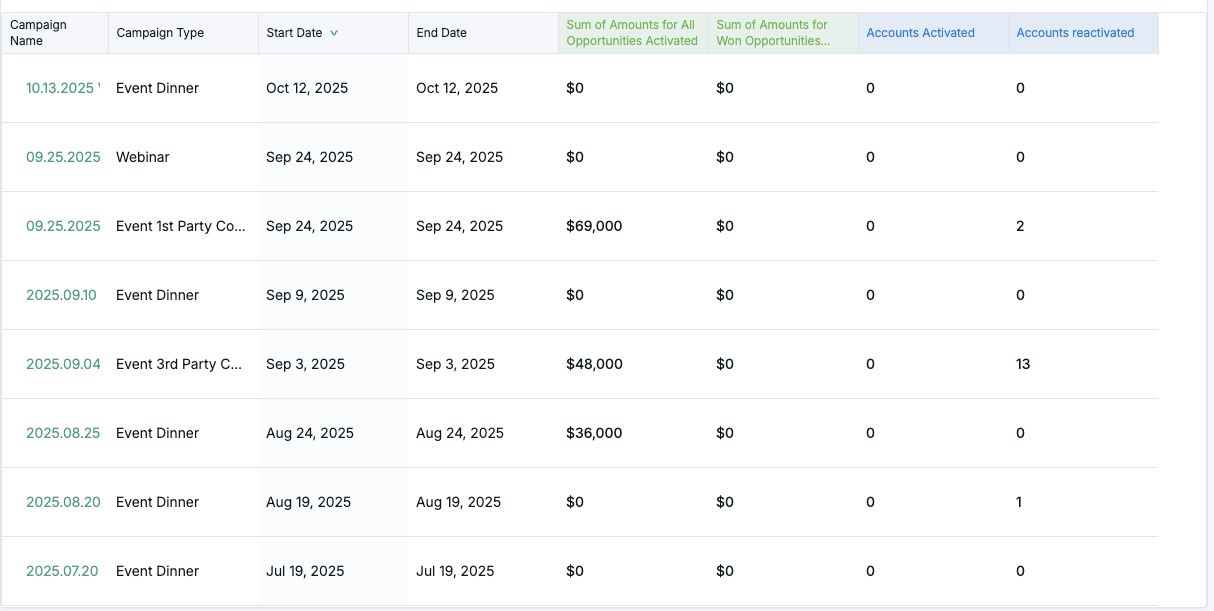
7 and 8. Accounts Activated and Accounts Reactivated
Which accounts showed meaningful first engagement because of your effort?
This metric shows which efforts drive the top of funnel awareness and get the first engagement on an account or the first engagement after a long period of inactivity.
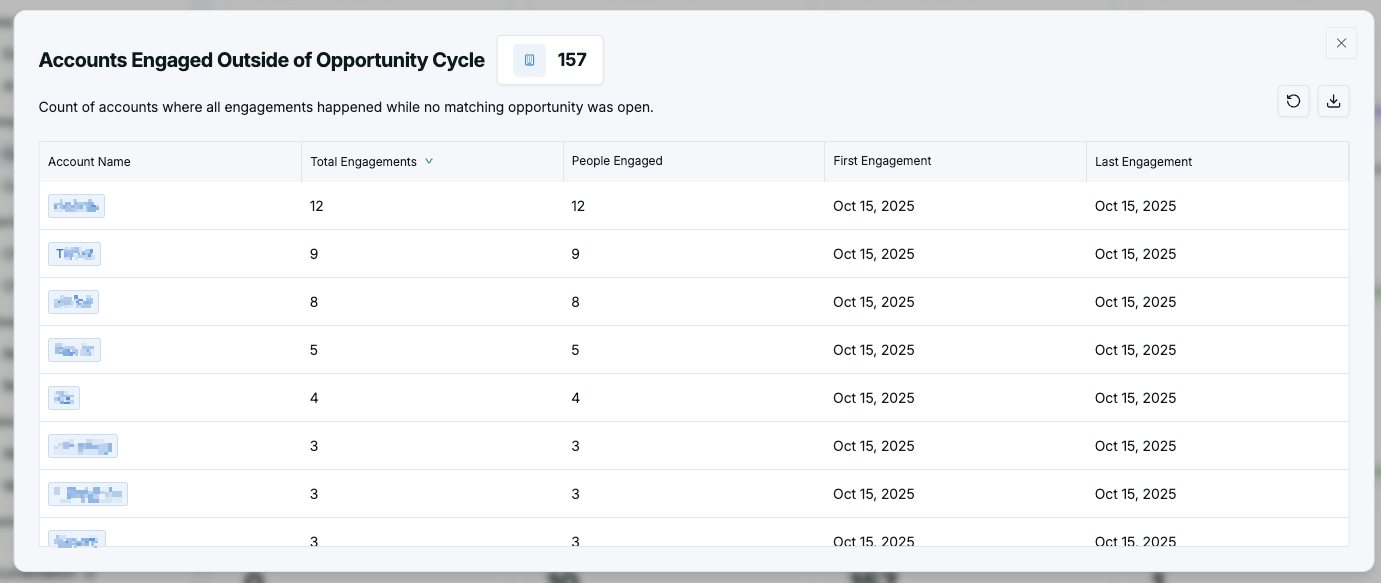
9. Accounts Engaged Outside the Opportunity Cycle
Selling into large accounts takes many months and sometimes many years. This metric shows all the early influences current systems might miss entirely. Some of the most essential GTM impact happens months before an opportunity exists.
The Future of Measurement Is Forensic, Not Zero-Sum
The old playbook asked: “Which single touchpoint deserves credit?”
The new playbook asks: “How did this deal actually happen, and where did we create real impact — together?” Reconstructing the full account story using clean, unified data unlocks the ability to answer questions with confidence, building the foundation for answering the only question that truly matters:
What should we do next to win more deals?