

This piece was originally published by Mada Seghete and Ethan Smith on The Future of Marketing.
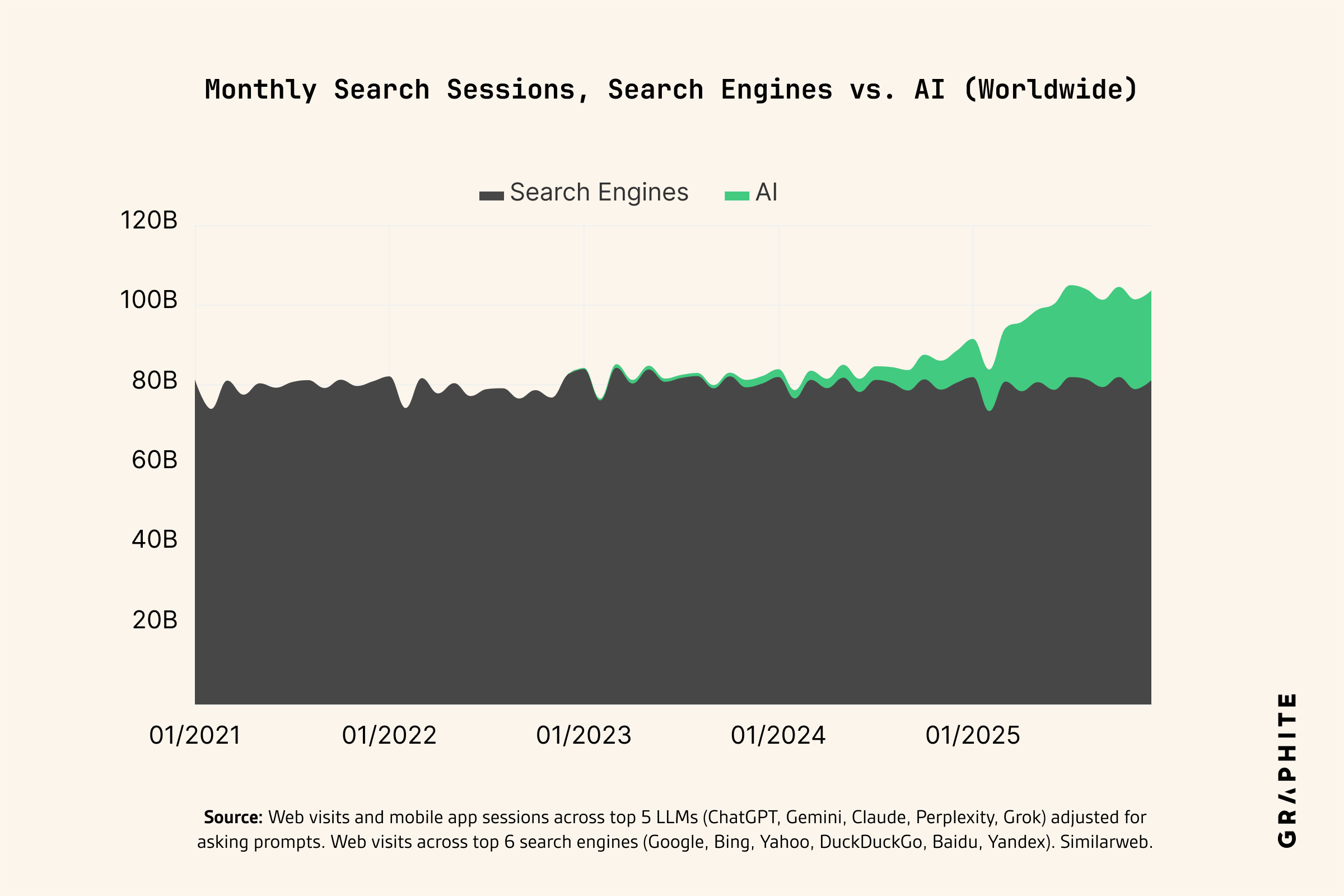
One of the most exciting things in marketing today is answer engine optimization (AEO). More people are searching than ever but they are not moving their searches from the web to AI. Instead, the search pie is getting bigger.
Graphite's research found that while web search has mostly plateaued, total usage of search via AI and search engines has increased by 26% worldwide. (Graphite)
The problem is that while everyone agrees AEO matters, no one can quite agree on how to measure it. Most teams are reporting visibility metrics and while AEO visibility is a good start, it's not revenue.
Visibility is a sample and doesn't mean you are reaching the right buyers
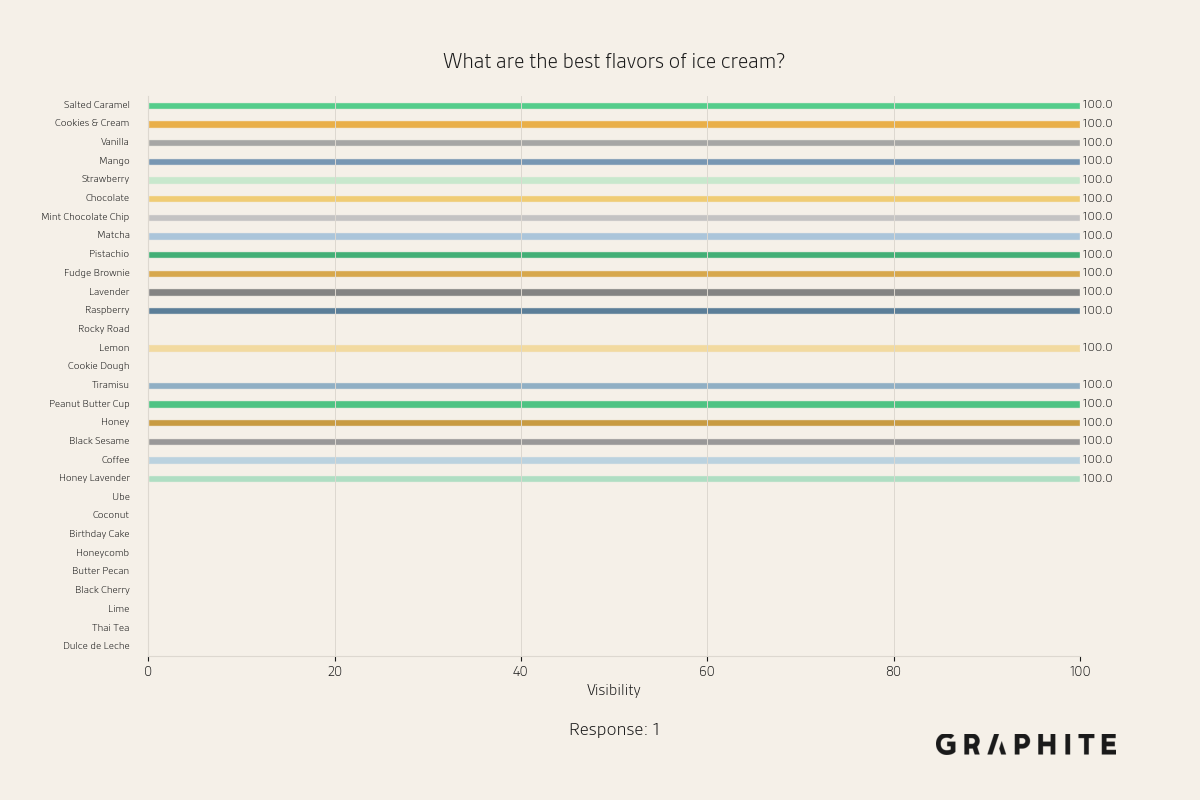
Google trained all of us to measure search positions, but AI answers don't work the same way. When you ask the same question twice, you almost certainly will get two different answers. Changing the wording, the model, or the surface can shift the answer again. As Ethan puts it, AI visibility is closer to estimating a probability than reading a fixed SERP. When you ask ChatGPT for the best ice cream flavors 200 times, vanilla shows up every time, coffee about half the time, and 57 different flavors appear at least once. (Graphite)
To make visibility useful, you need multiple questions with the same intent, multiple runs of each question, multiple answer engines and surfaces, and a prompt universe tied to the questions your actual buyers ask. A brand can improve its visibility score by tracking easy prompts, showing up in answers nobody in its ICP actually asks, or simply riding the overall growth of AI usage.
But unless you tie AEO to real revenue, you can't know its ROI.
Referral traffic is real but it's also only the visible slice
The biggest problem with AEO measurement is that AI research journeys are invisible to ordinary web analytics. Buyers ask ChatGPT or Gemini for recommendations, read the answer, close the tab, and come back a week later through organic search, a branded search, or Direct. The AI step is never recorded and even when an AI surface does pass a referrer, that single session rarely ends in a demo request or a purchase decision.
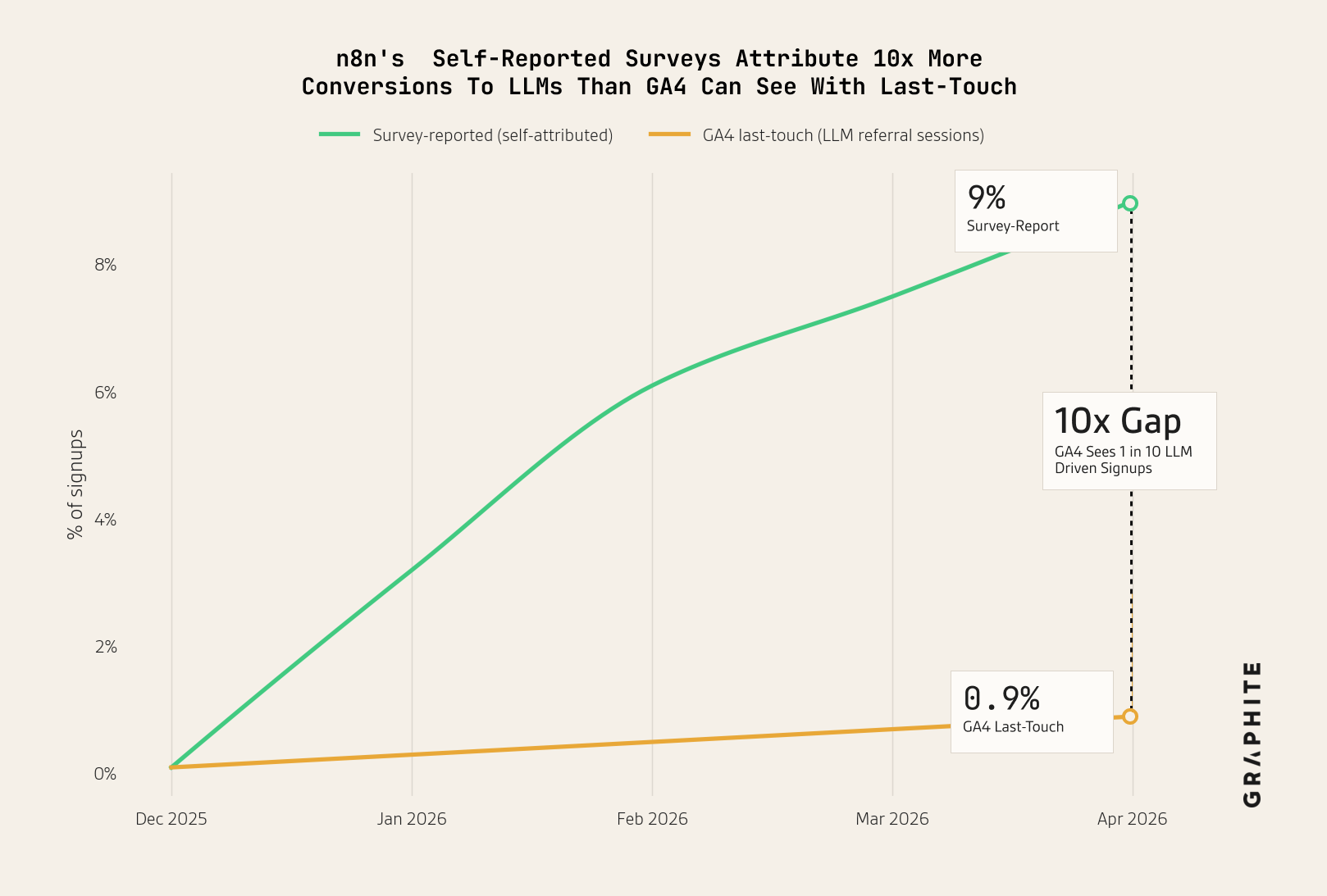
Graphite's analysis of n8n highlights the issue best finding that GA4 last-touch attributed about 0.9% of conversions to AI. A post-conversion survey attributed about 9%, roughly a 10x gap between the AI clicks analytics could observe and the AI discovery buyers reported. In n8n's case, Graphite reports that about 90% of AI-attributed conversions had no citation-link click. (Graphite)
The AEO evidence is scattered across many data fragments
At Upside, when we started helping customers understand the impact of their AEO efforts, we were honestly skeptical. Is this even possible? It turns out the AEO journey does leave fragments behind: emails, call recordings, "how did you hear about us" forms, CRM notes. You just have to go find them.
There are three practical ways to find that evidence:
Capture the easy traces: AI referrers, UTMs, tagged citation links, landing pages, session activity.
Mine what you already have: Call transcripts, emails, CRM notes, and buyer communications.
Ask the user: Ask on forms and discovery calls whether the buyer used an AI tool while researching you, then store the answer in a field, not a note.
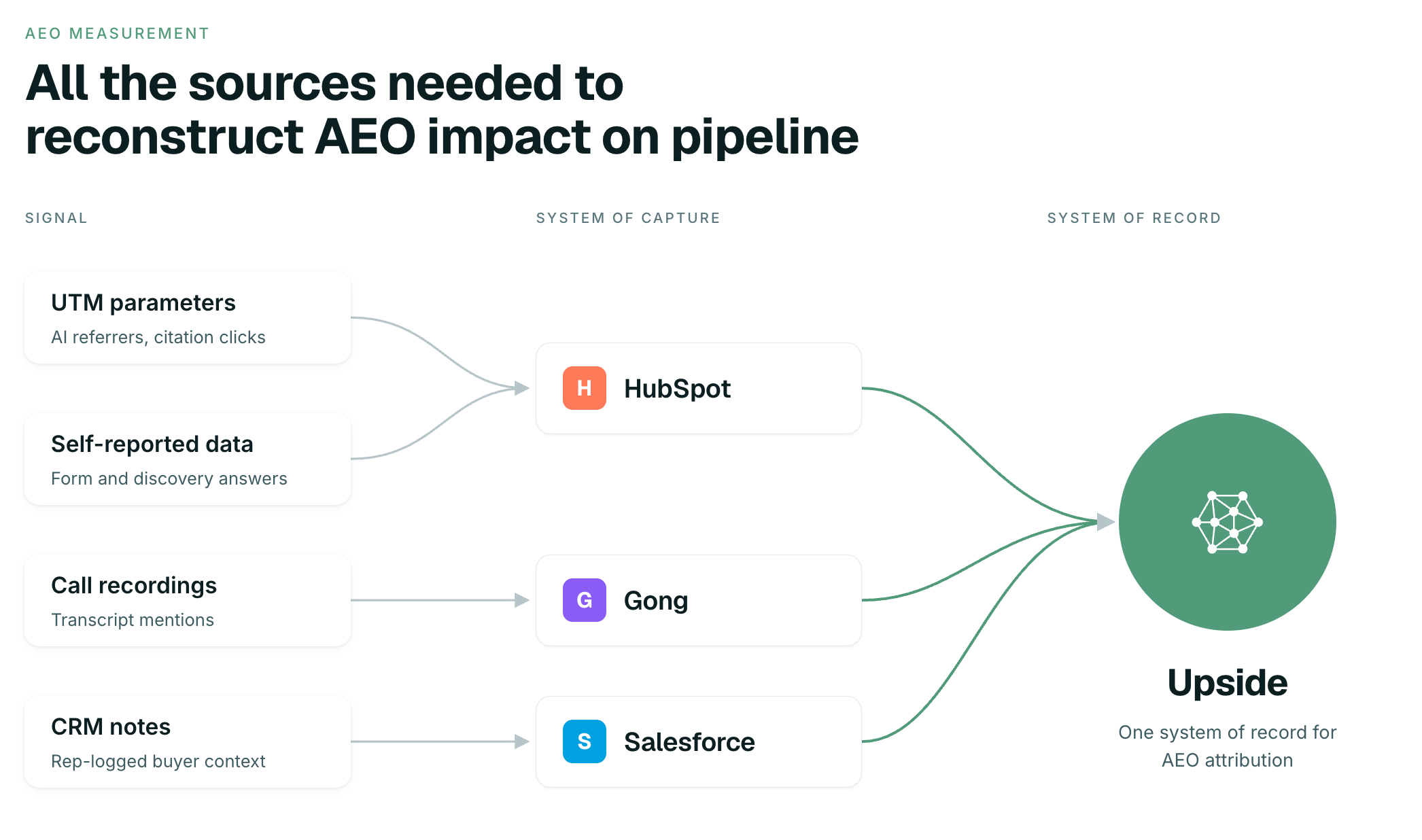
The next step is to tag every signal with its source and a confidence level. For example, a buyer saying it in their own words on a call is stronger evidence than a rep's recollection six weeks later when they fill out a Salesforce field. It's also important to define the difference between AI-sourced deals (AI was the first identifiable touch) and AI-influenced deals (AI appeared anywhere in the journey).
Here's what it looks like once those fragments are stitched and tied to an opportunity by Upside:
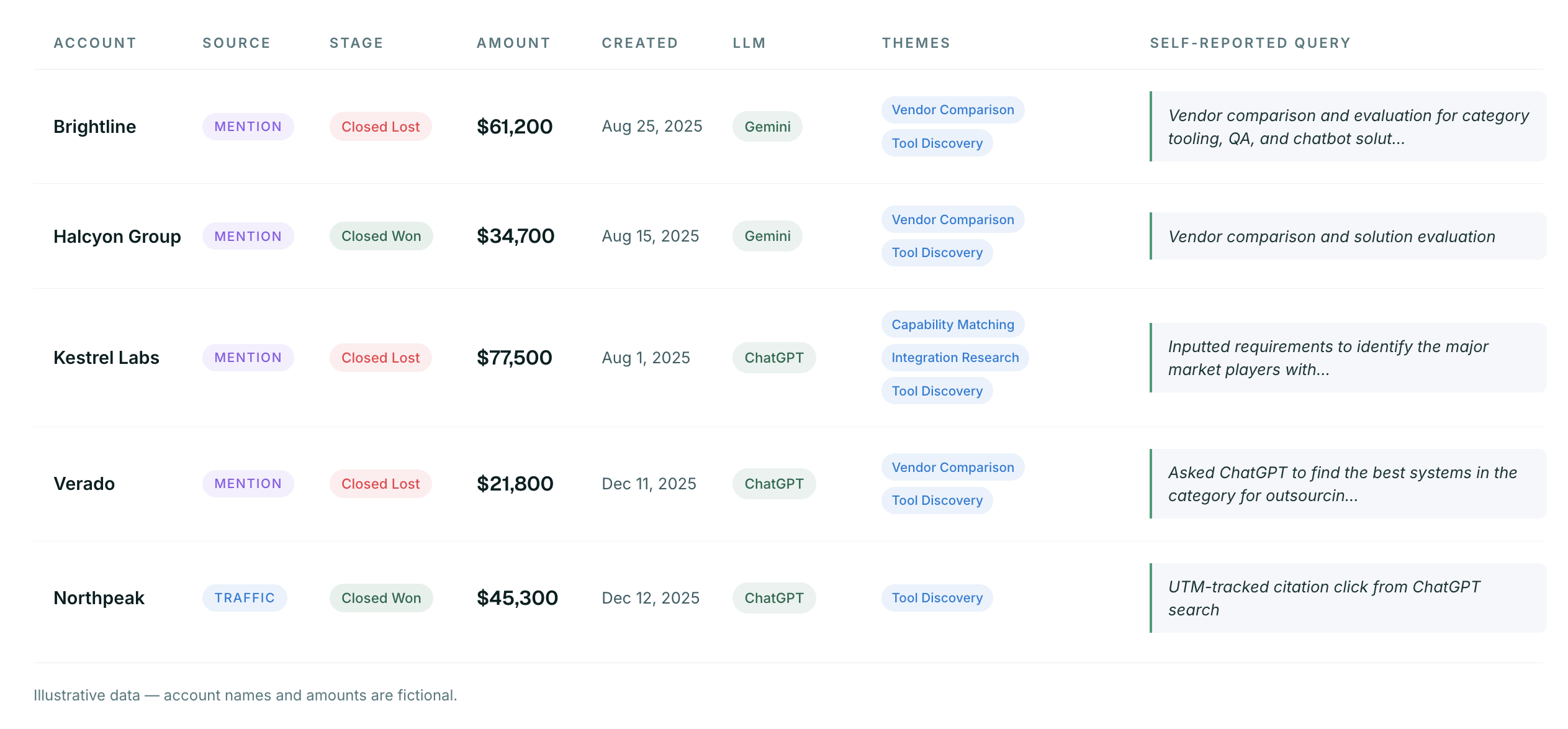
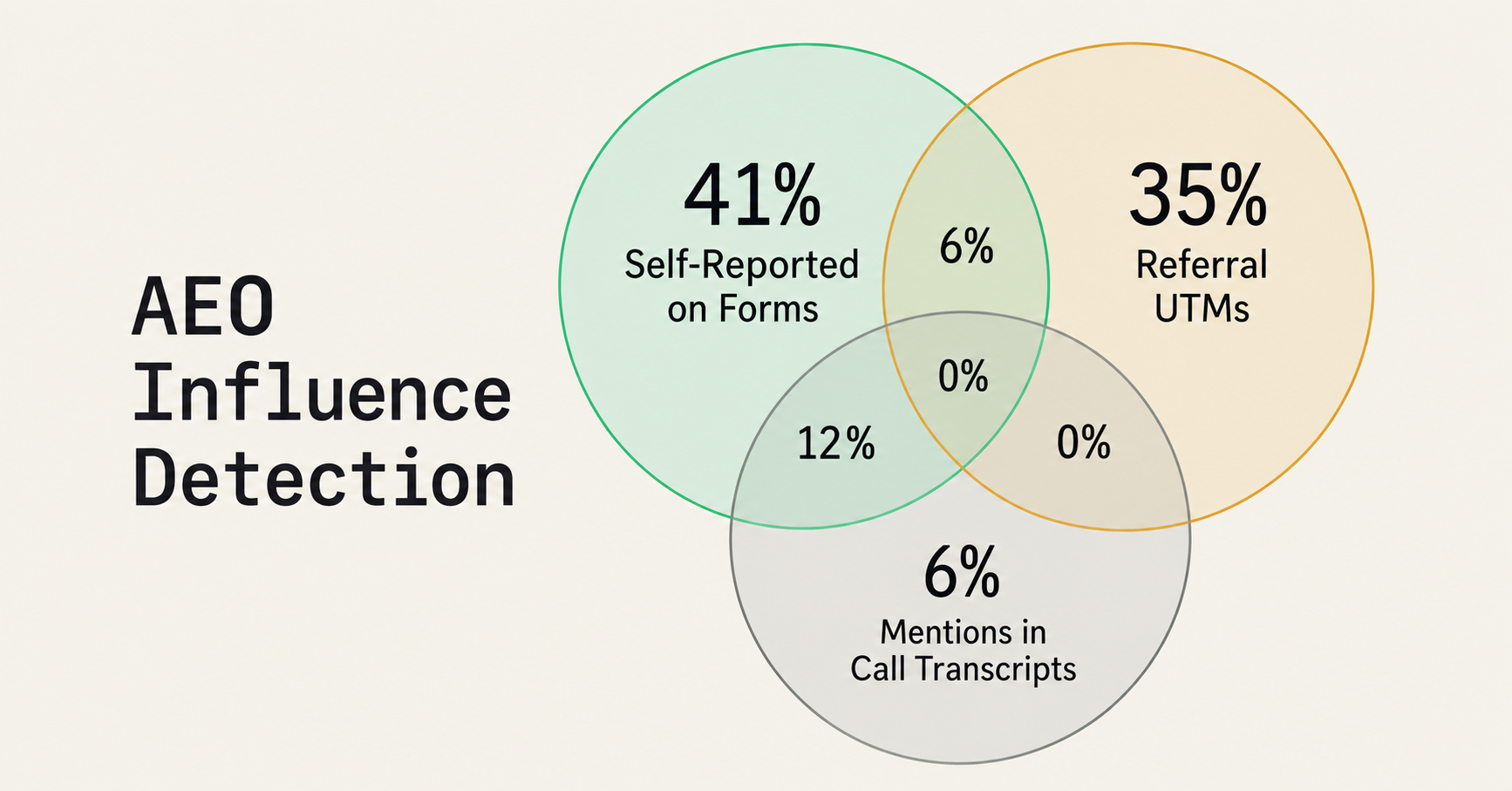
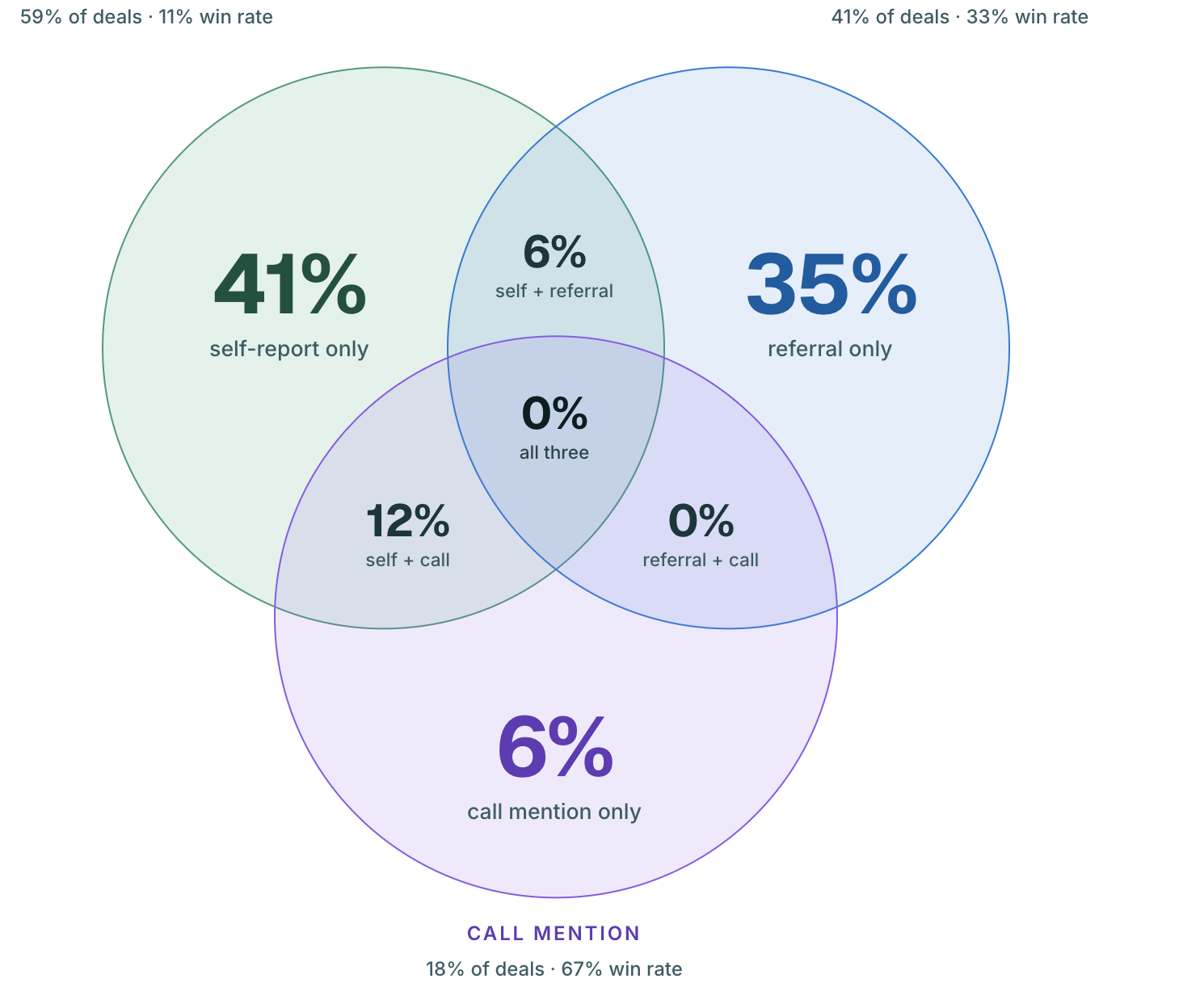
One customer built an AEO pipeline ROI miniapp on top of their unified GTM data in Upside and found something surprising: the overlap between detection methods is remarkably small. Each method catches deals the others miss, which means even more deals are AEO-sourced or influenced than any single method reports.
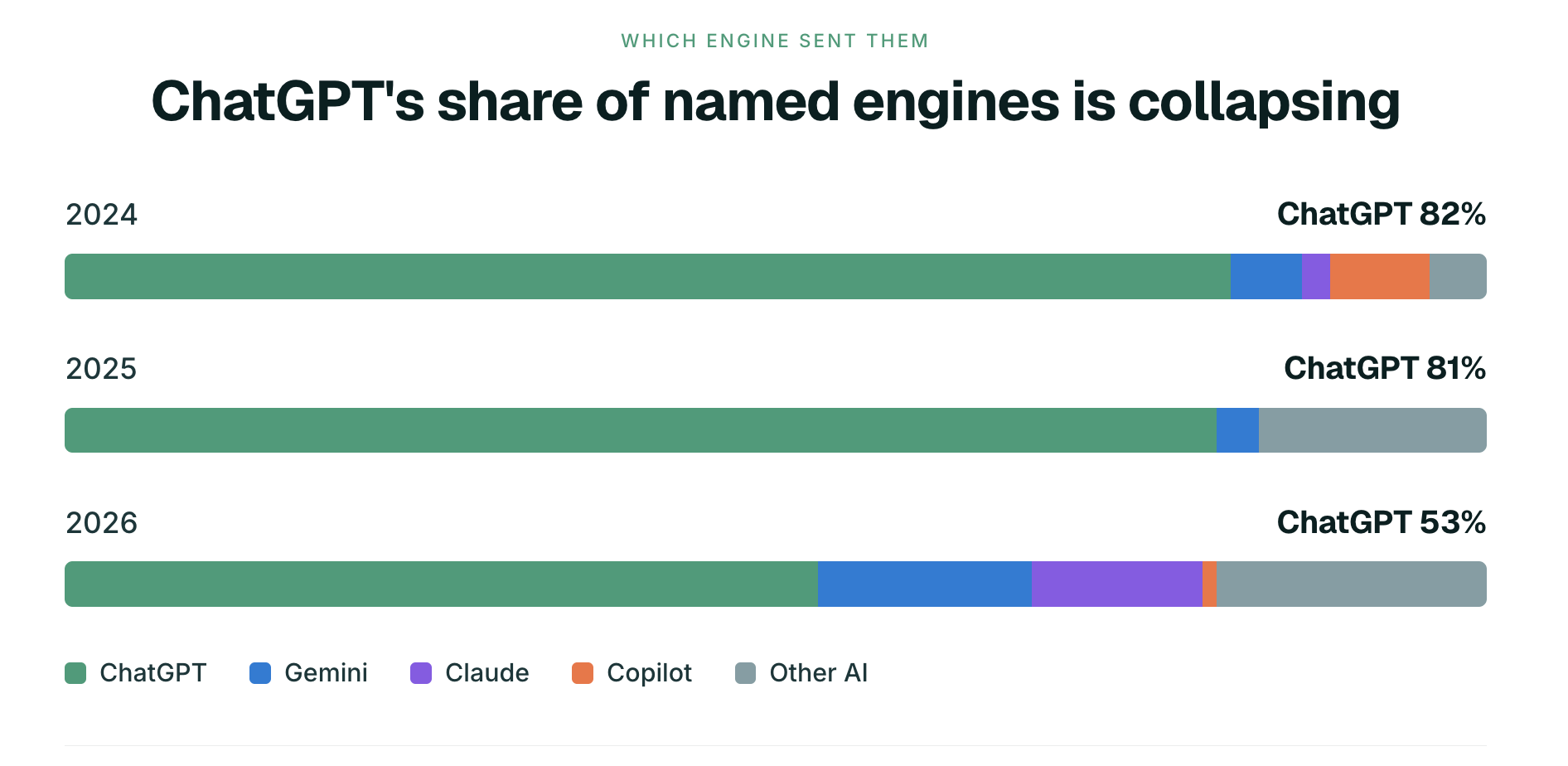
Because each deal is tagged with the engine the buyer used and what they were searching for, the same customer can watch the channel shift under them and adjust the program as it grows:
AI-influenced opportunities can signal stronger buying intent
This makes sense: a buyer who has asked an AI to compare vendors and check integrations is signaling real interest. One customer saw an 8% relative improvement in close rate on qualified opportunities from AEO. Another saw a win rate roughly 2.5x as high on AEO-sourced opportunities. Some of that difference may reflect selection bias: buyers whose AI research we can detect may already be more engaged. These results don't prove AEO caused the higher win rates, but they give us a useful signal to investigate.
How we can help
We wrote this together because we sit on two sides of the same problem, and we think you need both. If you want to turn AI search into revenue, the Graphite team would love to help. And if you want to know whether that visibility is actually turning into pipeline, that's where we come in at Upside.