This post first appeared in The Upside-Down Funnel, our newsletter on Substack.
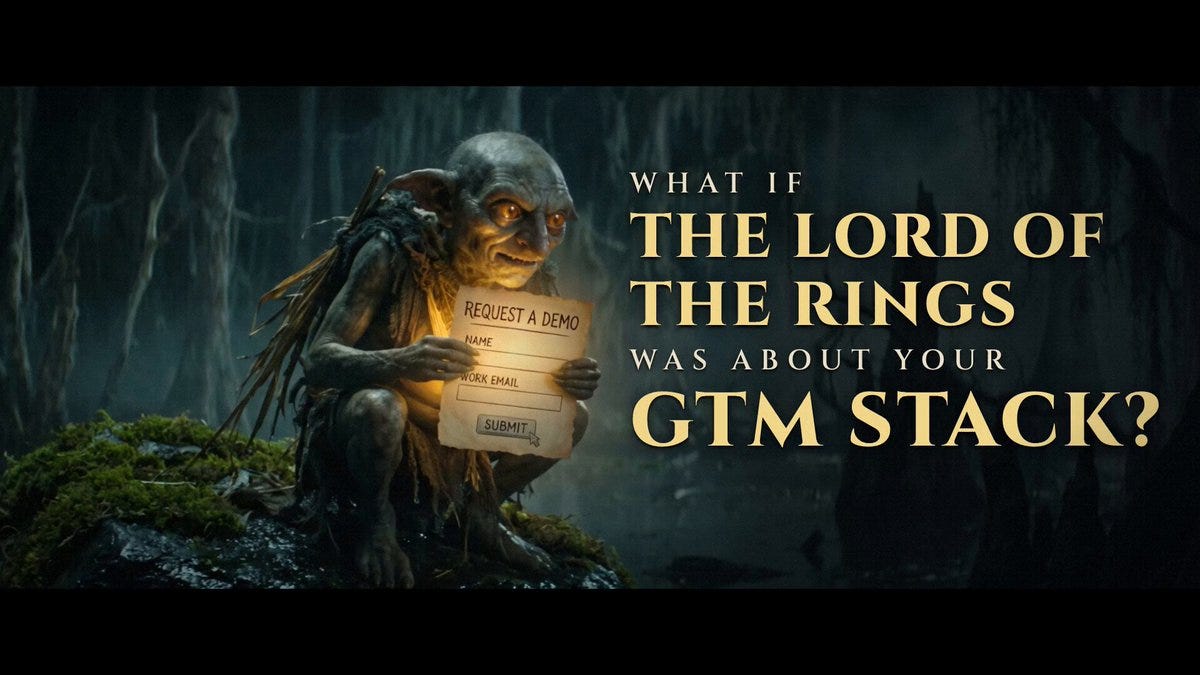
Last issue I gave video generation a D in my AI workflow ranking, so two weekends ago I tried again. I redid the intro to The Lord of the Rings, but about AI in GTM (three tools were given to Marketing, seven to Sales, and nine to RevOps, who above all else desired a single source of truth - they received nineteen) and it did pretty well.
Making it got me thinking about where in the creative process AI really helps and just how much of my work is actually me and how much is AI. I found the answer changes a lot depending on the stage. I also spent a lot of the last few weeks inside customer data, and the same two pipeline patterns keep showing up across customers, so I’m including them here.
The week in one minute
What we’re trying: A Lord of the Rings intro for GTM + how I split my work between me and AI
Demand trends: The patterns I keep seeing across multiple companies - LinkedIn ads aren’t a strong source of pipeline, and referrals are huge and underfunded
Worth your attention: ChatGPT for Sales, Salesforce inside Microsoft Copilot, HubSpot going headless first + Anthropic’s interviews on how companies work with AI
GTME jobs: The “AI builder” title shows up in GTM + three roles to check out
What we’re trying
One data layer to connect them all
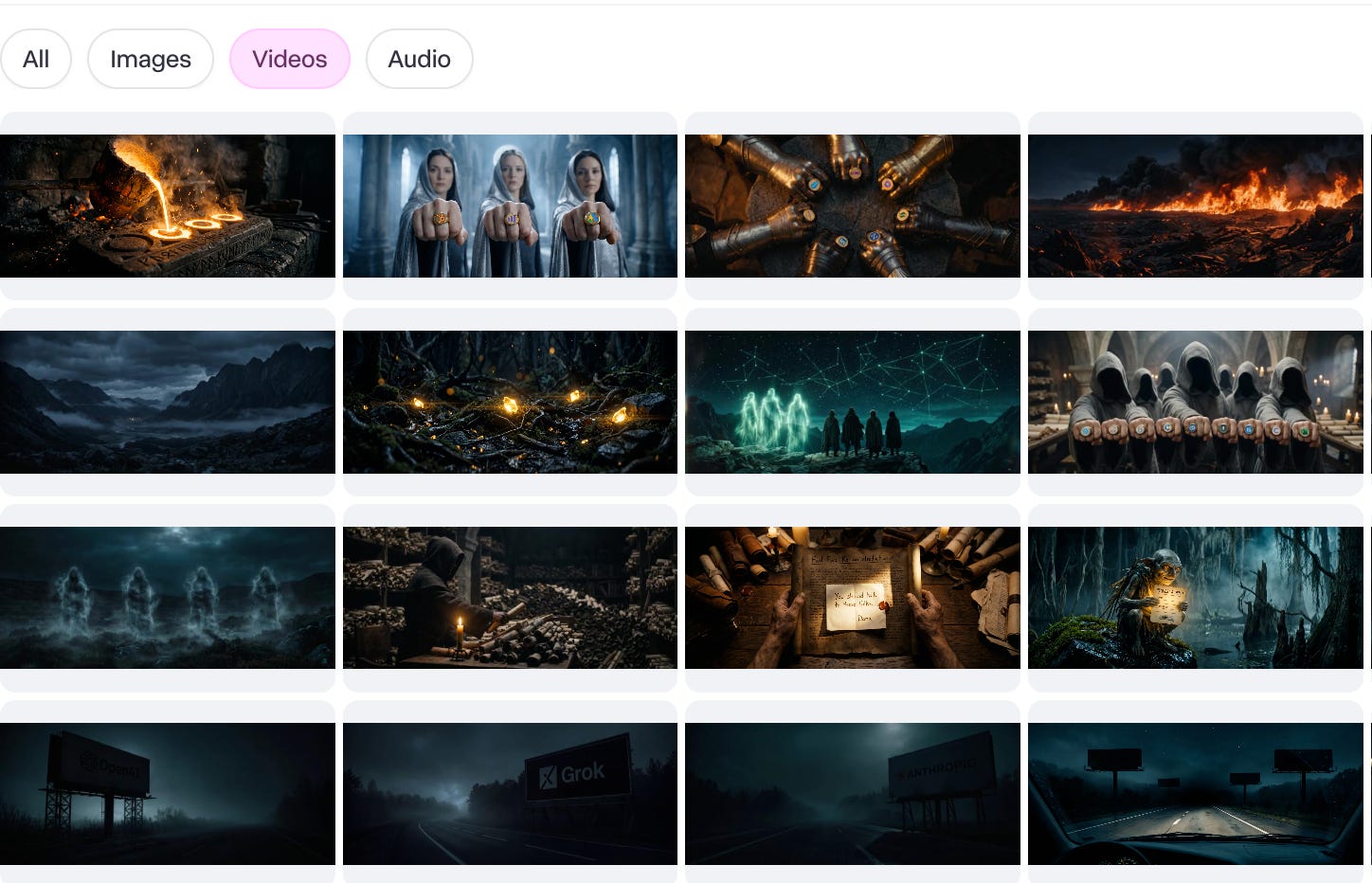
Watch the video here. Many of our customers use the Upside MCP instead of connecting to a lot of others (Gong, Salesforce, HubSpot, etc), so I had this idea of one MCP to connect them all, and I spent a Friday night seeing if I could remake the Lord of the Rings prologue, except the rings are GTM tools.
A few things I learned making it:
It was easier than I thought - Claude Fable 5.2 + Runway were incredible
Making a video with AI turns out is not that different than writing a product spec for a story
The voice intonations needed help - I ended up recording myself, then using Claude to describe my voice and ElevenLabs in Runway to recreate it with a voice more similar to Galadriel
Claude ran on its own with the whole video and created a passable, but giving art direction for every scene made it significantly better
Demand trends - What I keep seeing across companies
LinkedIn ads do not appear to be a strong source of pipeline.
I looked at the last 18 months at 9 B2B companies, and found people who came in from LinkedIn became an opportunity less often than people from organic search at all nine (at seven of them less than half as often, and at four less than a tenth as often).
The opportunities LinkedIn did source won less often at every customer with enough closed deals to tell (about 40% less often at one, and about a tenth as often at another).
Accounts that saw LinkedIn ads before a deal started won at the same rate or lower than accounts that never saw them at the majority of companies.
LinkedIn lead-gen forms perform the worst. Over 18 months at nine companies, I could trace at most one or two won deals per company back to a LinkedIn form, and none at four of them. When a deal with a form-filler did close, the form was usually filled months or years earlier, or the account was already talking to sales or already a customer.
This might be why LinkedIn keeps changing its algorithm - as I found last issue, 1/4 of my feed is now ads.
Referrals are huge and underinvested in.
Across the customers I looked at, deals that came from a referral won at about 2.3 times the rate of everything else. At one customer referrals were 3% of new opportunities and 9% of wins, and I found more deals with signs of a referral sitting under other channels (mostly marketing) than the CRM credited to referrals in the first place.
Only about a quarter of SaaS companies have a formal customer referral program.
This matches what we found in The Untracked Half: brand, advocacy and referrals start 28% of deals, and the opportunity source field credits them with 5.6%.
With AI slop everywhere and trust getting harder to earn, I believe referrals, and trusting people who have used a product over info you find online, will become bigger and bigger for humans and for agents. G2 and similar sites will keep making a comeback as a source for agents, and I think referrals should be the number 1 program B2B marketing teams invest in.
How I actually split the work with AI
People ask me how much of what I make is AI. I think my process, especially for creative work is quite different that how engineers and PMs operate. I tend to not know quite what I want and go through many iterations to come up with something interesting. Claude believes my brain is closest to a diffusion model (maybe why I am so emotionally attached to Midjourney):
How much is AI depends on the stage, and for me it looks like this:
Idea stage - 80% me, 20% AI. Most of the ideas I’ve had recently have been mine - I find AI to not be great at creative thinking, BUT it’s incredible at helping hone the idea. For example, I was looking at names for this newsletter tied to the funnel, and Codex actually suggested The Upside-Down Funnel.
Execution stage - 60% AI, 40% me. This is where the agents do almost everything, and my 40% is asking the right question / checking what comes back / throwing out what is wrong or doesn’t make sense / giving more context when needed. I usually find I need at least 7-10 reviews for almost everything I have generated (but sometimes I go up to 50+), and that is significantly more than my technical co-founders, who spend a lot more time on the commander’s intent. The difference I think is that I tend to not know exactly what I want in my creative process, so I evolve my definition of the result together with my agents. It also depends on the type of project - I find myself loving Codex for the more generative, visual projects, Opus for data research and insights, and Fable for reasoning and writing.
Polish/review stage - 60% AI, 40% me. I think the hardest thing about working with AI is that the results can look so good and yet make no sense. I still find myself spending a lot of time reviewing and cutting things.
Worth your attention
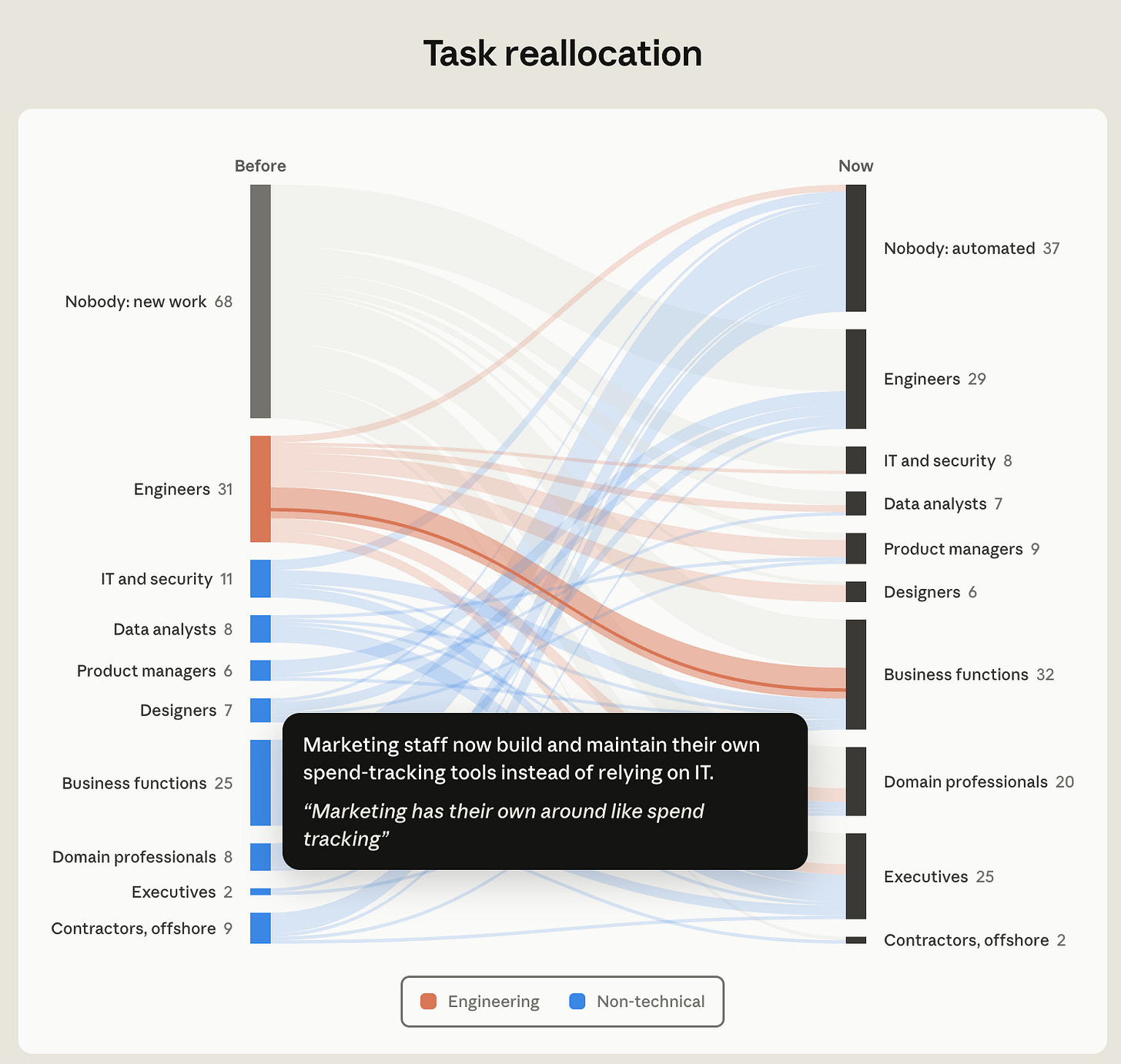
Anthropic released its own research on working with AI. Working with AI came out on November 23 and is based on 66 interviews at 58 enterprise customers. Most of the value people described came from doing more, not from cutting costs and completely reorganizing their teams. The bottleneck that came up again and again was reviewing what the AI produces, which matches my own work above.
OpenAI launched ChatGPT for Sales. On November 17 OpenAI introduced ChatGPT for Sales: a Sales plugin plus more than 30 new and expanded partner plugins (Salesforce, HubSpot, Gong and others) for account research, call prep and follow-up, and Clay’s plugin can now build full workflows inside the chat. The sales rep’s home screen is moving out of the CRM and into whatever AI they already have open. If the rep lives in ChatGPT, Copilot or Claude, the CRM stops being the place where selling happens and becomes the place the AI reads from. Then what matters is how complete that data is, and in The Untracked Half we found that about half of what creates a deal never makes it into the CRM.
Salesforce is now inside Microsoft Copilot. The same day at Ignite, Salesforce and Microsoft announced Copilotforce: sellers can ask questions about their deals and update the CRM from Copilot and Teams. It was announced in the middle of a storm week both figuratively (Jensen, the Anthropic IPO, HubSpot’s refounding) and literally, as Moscone got flooded in the middle of Ignite. If even Salesforce is happy to be the system underneath someone else’s assistant, the fight is no longer over who owns the seller’s screen, it is over who owns the data and the actions behind it.
HubSpot moves to headless first, with agent access included in every seat. Every seat includes access from Claude and ChatGPT at no extra cost, agents you bring use the API capacity you already have, and governed agent work at scale is paid with credits. It is also the first concrete thing out of HubSpot’s refounding: Brian Halligan came back as CEO on November 12, and he and Dharmesh Shah said they are refounding the company around a headless HubSpot that agents use (my feed has been full of refounding posts ever since). They are trying it in public, mistakes and all: on day one the home page called HubSpot the “Customer Relationship Harness”, and less than a week later Dharmesh took it back, saying most people were “either confused, irritated or both.”
GTME jobs and trends
This week’s pattern on the GTME tracker: the job titles are changing. Syndio is hiring a GTM AI Builder, Tutor Intelligence a GTM Builder, Harvey a Senior AI Enablement Engineer for GTM and LumApps a Senior GTM AI Engineer. A few cool roles:
Vercel, GTM Engineer: Austin, New York or San Francisco, hybrid. $180K to $295K base in San Francisco, plus equity.
Perplexity, Growth GTM Engineer, Revenue Operations: San Francisco, Austin or New York, hybrid. $175K to $235K, plus equity.
Harvey, Senior AI Enablement Engineer, GTM: Remote. $153K to $210.5K, plus equity and bonus. Owns the skills, plugins and agents the GTM team uses.
Stranger than fiction
Reading X these days feels like watching a modern version of Game of Thrones, and founders at the helm seem to be the consensus hope for companies trying to navigate the uncertain, perhaps perilous waters of the next 12 months. If superintelligence is really coming next year and changing what the world will look like, it seems investors believe founders like Jensen (regardless of his sins), or Brian and Dharmesh from HubSpot, are the right leaders to navigate these waters.